
Parallel Vectors Calculator
Enter the vector components to determine if they are parallel or not by calculating their cross-proportions or cross product.
Quick Examples
Solved Examples
The following are examples of problems solved by the calculator.
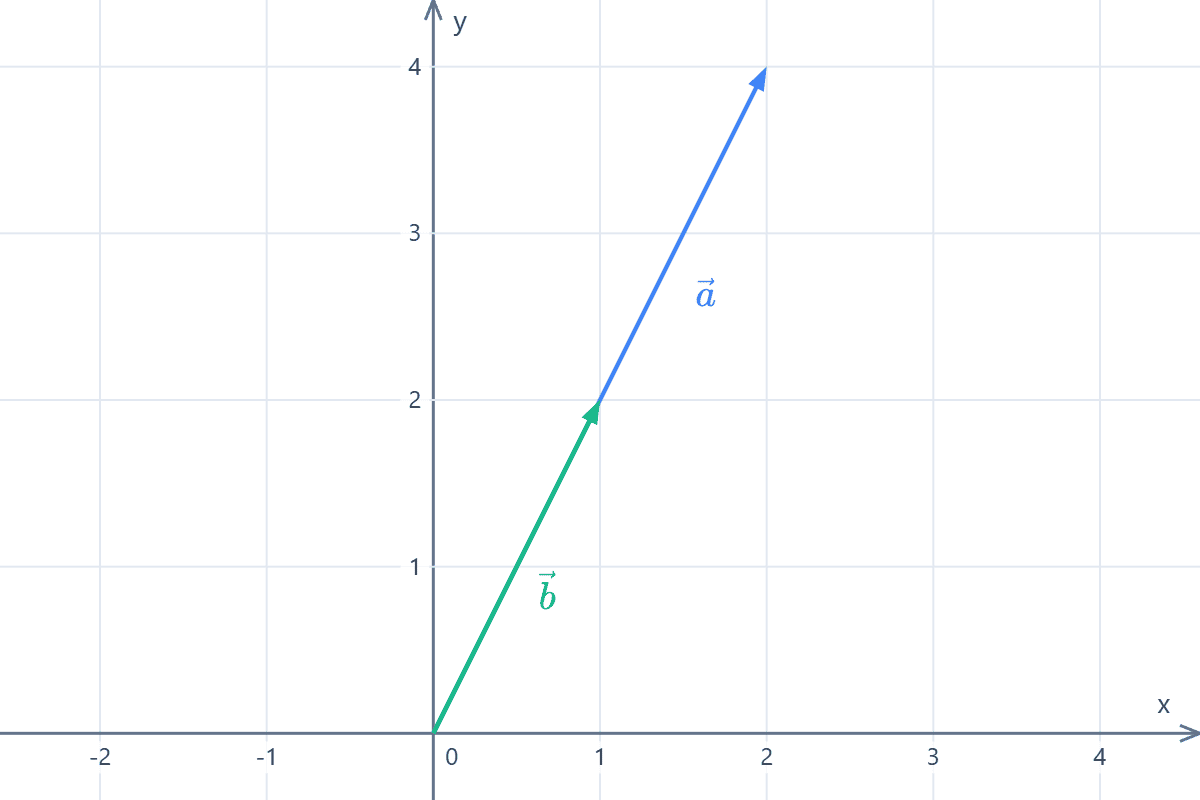
Determine if the vectors ⟨2, 4⟩ and ⟨1, 2⟩ are parallel.
Result
The given vectors ARE parallel.
To confirm this, we calculate the equality of the cross-proportions:
Since the result is zero, vectors a and b are parallel.
Furthermore, vector a can be obtained by multiplying b by the scalar \( \displaystyle k = 2 \):
Since k > 0, the vectors point in the same direction (the angle between them is 0°).
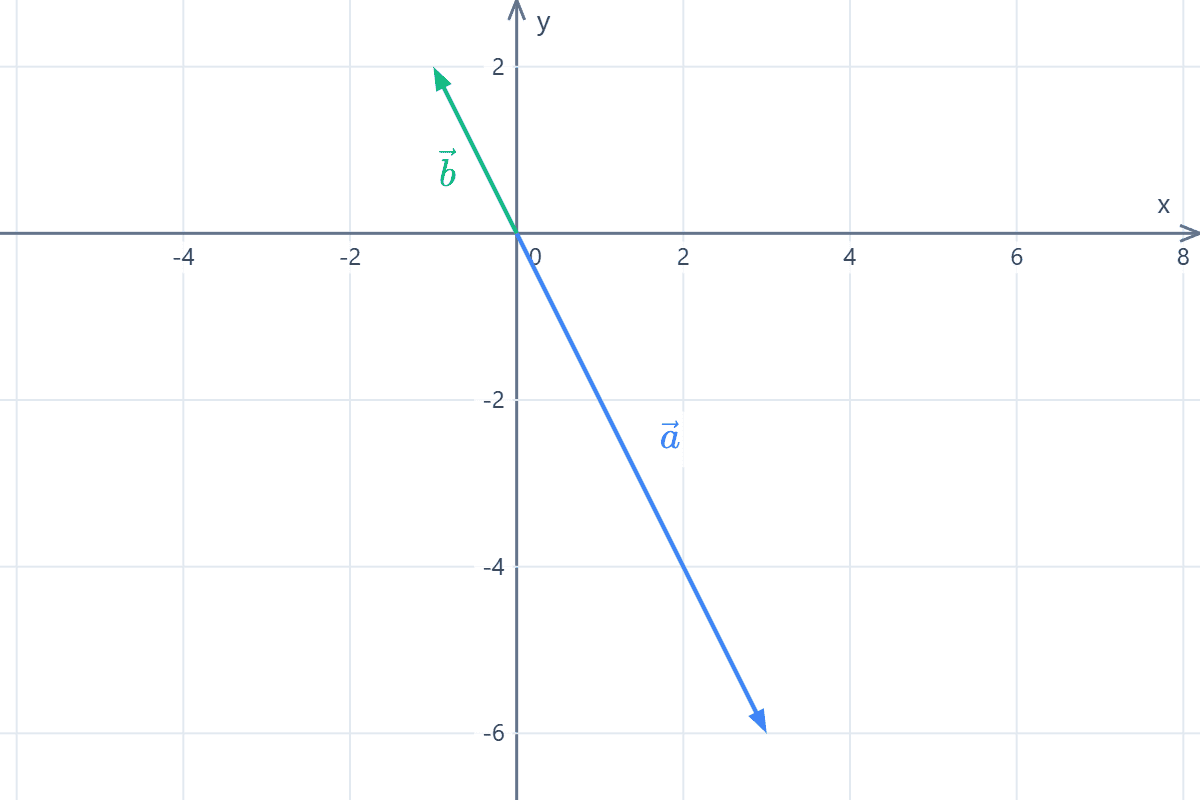
Determine whether the vectors ⟨3, -6⟩ and ⟨-1, 2⟩ are parallel or not.
Result
The given vectors ARE parallel.
To confirm this, we calculate the equality of the cross-proportions:
Since the result is zero, vectors a and b are parallel.
Furthermore, vector a can be obtained by multiplying b by the scalar \( \displaystyle k = -3 \):
Since k < 0, the vectors point in opposite directions (the angle between them is 180°).
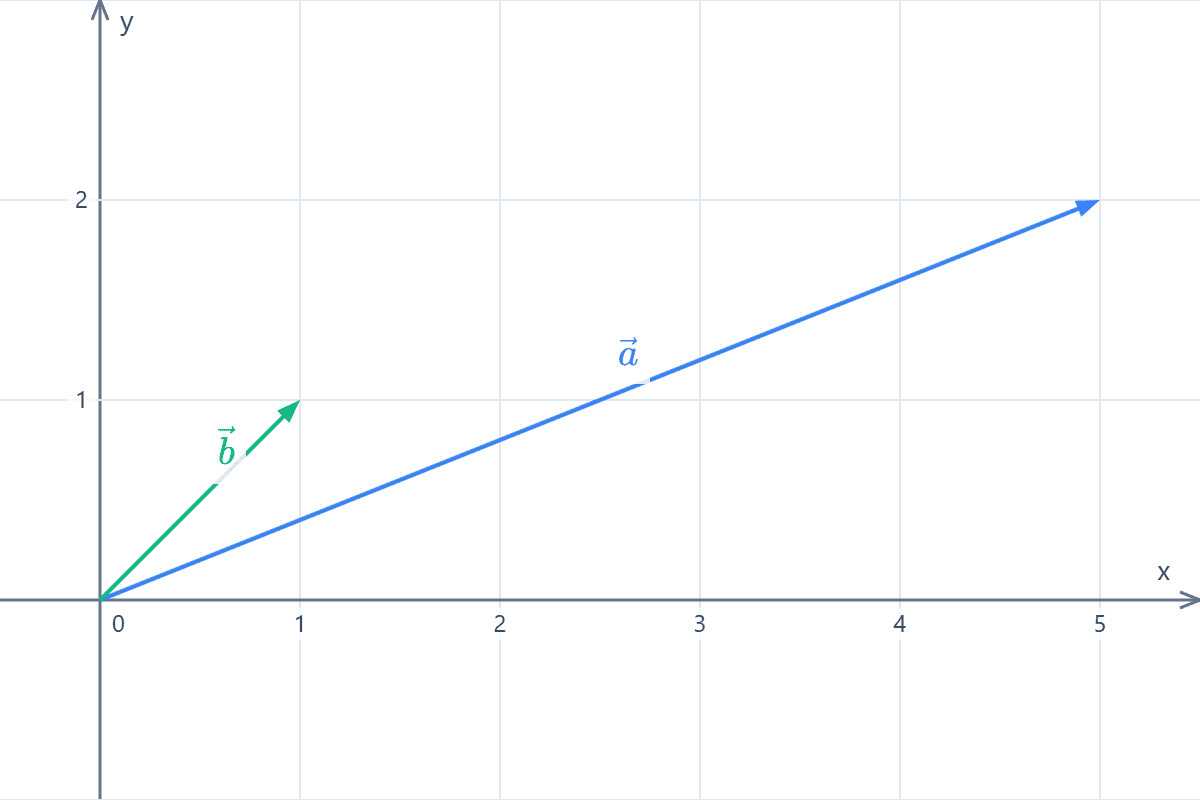
Calculate the parallelism between the vectors ⟨5, 2⟩ and ⟨1, 1⟩.
Result
The given vectors ARE NOT parallel.
To confirm this, we calculate the equality of the cross-proportions:
Since the result is non-zero, vectors a and b are not parallel.
Find out whether the vectors ⟨2, 4, -2⟩ and ⟨1, 2, -1⟩ are parallel or not.
Result
The given vectors ARE parallel.
To confirm this, we calculate the cross product:
Since the resulting vector is the zero vector, vectors a and b are parallel.
Furthermore, vector a can be obtained by multiplying b by the scalar \( \displaystyle k = 2 \):
Since k > 0, the vectors point in the same direction (the angle between them is 0°).
Related Tools
